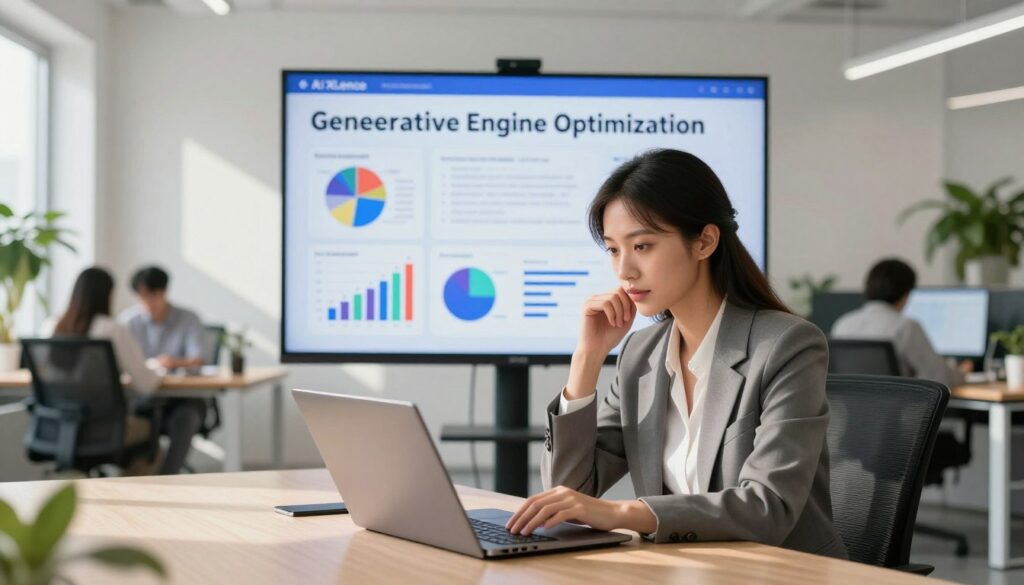
Have you seen your website traffic change with AI tools? Many small business owners in the United States are noticing a drop in clicks. This is because people now want quick, direct answers instead of long lists.
The digital world is moving to a new model. Machines are now curating information for us. To stay seen, you need to change your strategy to fit these new habits.
By using generative engine optimization, you can make your content work with today’s data systems. This keeps your brand trusted in a world where AI finds answers for us. It’s time to update your ways to grab attention in today’s fast world.
Quick Answer: What Is Generative Engine Optimization?
Generative engine optimization is a new way to keep your brand seen in a world where AI rules search. It’s different from old SEO, which focused on keywords and links. Now, it’s all about context and factual accuracy.
This new method connects your digital stuff with the smart models behind today’s search engines.
Studies from KDD ’24 show a big win for businesses. They can get up to 40% more visibility in AI searches by using these new methods. AI works differently than old search crawlers. So, your old rankings might not work for AI summaries.
You need to become a trusted source for AI to mention your brand. This means your content must be very relevant and true.
The main goal of generative engine optimization is to get AI to see your brand as a reliable source. When someone asks a question, AI looks at many data points to give a good answer. By making your content clear, relevant, and true, you’re more likely to be chosen by AI.
GEO is about building trust with AI and users. By giving clear, quality data, you make your brand stand out. This way, your business is a top pick for users who use AI to find things online.
Why Google Says GEO Stil Relates to SEO
Generative engine optimization is not a new start but a next step. Search engines are moving from simple links to answers, but their goal stays the same. You need to offer top-notch, trusted info that answers what users want.
Today’s generative engines use Large Language Models (LLMs) to handle lots of data. These models draw from many sources to give users a single answer. Your content is key for these models to work well.
Many think their old SEO work is useless, but that’s not true. Your SEO GEO work is the base for these new AI systems. By using best practices for AI optimization, your site stays important in the age of AI answers.
Google values content that shows you know your stuff. This is true for AI answers too. Being helpful makes your site meet today’s search tech needs.
The move to generative engine optimization is about changing how you think, not starting over. Keep making your content clear, right, and focused on users. This way, you stay ahead while the digital world changes.
How Generative Search Uses Helpful Content
To succeed in the AI era, brands must grasp the “Synthesis Gate.” This gate filters content for trust and relevance. With over 60% of searches ending without a website visit, your content must offer quick, valuable answers.
The move to probabilistic models means AI search optimization now focuses on clear, authoritative content. This content should be human-centric and easy for AI to synthesize. By valuing quality over quantity, you meet the goals of modern search engines.

Want to Use AI More Effectively in Your Business?
AI XLence gives small business owners practical ways to save time, improve productivity, reduce workload, and grow revenue using AI.
Explore AI XLenceDevelopers worry about “model collapse” from training on low-quality text. Search engines prefer human-first content with unique insights and facts. By using original research and expert views, your brand can become a trusted source for generative AI search results.
Small business owners can become high-trust brands by focusing on consistent, accurate information. Learning about geo-seo strategies can give you a competitive edge.
The aim of generative AI search is to give the best answer. Create content that’s easy for machines to understand but valuable to humans. Embracing AI search optimization today will keep you ahead in the evolving search technology landscape.
How to Create Content AI Systems Can Understand
To succeed in the era of AI, your website must speak the language of machines. AI models crawl your site, looking for specific signals. They decide if your info is relevant to a user’s query.
This process, called the “Retrieval Gate,” acts as a filter. It decides which data gets included in an AI-generated summary.
Effective AI search optimization starts with a clean site. Organize your pages with clear, descriptive headings. This helps AI crawlers understand your site structure.
Technical performance is key for your success. Fast render times help search bots index your pages quickly. Here are some technical standards to improve your content for AI search:
- Schema Markup: Use structured data to provide explicit context about your business, products, or services.
- Direct Definitions: Place concise, factual answers at the beginning of your paragraphs to satisfy AI extraction needs.
- Bulleted Lists: Use lists to break down complex information, as AI models often prioritize these formats for quick summaries.
By focusing on these technical elements, you make your site more accessible. Providing high-quality content for AI search helps these systems retrieve your data accurately. Prioritizing AI search optimization keeps your brand visible as search technology evolves.
How to Add Original Value and Trust Signals
To become a top source for AI, you need to do more than just summarize. Create content for AI search that shows your brand’s unique skills. This means adding special data that only you can offer.
Using original research and expert opinions is key. Adding citations, quotes, and verified stats can make your content stand out. This makes AI see your site as a trusted source, not just a place for copied info.
Being open is also important. Link your brand to trusted sites and data banks. This creates a clear online presence. By being transparent, you help AI systems trust your information.
Quotes from experts add a personal touch that AI likes. When you share insights from leaders, it’s hard for AI to ignore. This makes your content for AI search more reliable in a world where automation is growing.
| Signal Type | Traditional SEO | AI-Focused Trust |
|---|---|---|
| Data Source | Keyword density | Primary research |
| Verification | Backlink count | Expert citations |
| Content Goal | Ranking position | Entity authority |
| Transparency | Meta descriptions | Verified data banks |
Common GEO Misconceptions to Avoid
Understanding modern search means clearing up AI myths. Many think GEO is a one-time setup for forever results. But, it’s really a never-ending process of improvement.
Some also believe AI will replace old SEO methods. But, they should work together for a strong online presence. Learn more about these myths by checking out common GEO misconceptions.
AI results can change a lot, up to 60% each month. This is because AI models keep getting updated. It’s normal, not a sign of failure.
Want to Use AI More Effectively in Your Business?
AI XLence gives small business owners practical ways to save time, improve productivity, reduce workload, and grow revenue using AI.
Explore AI XLenceBrands might feel down when their visibility changes. But, this is just how GEO works in a changing world. Your content needs to keep up with these changes.
Success in this field needs patience and a focus on long-term growth. Don’t expect quick, fixed results. Instead, be ready to adapt as search tech evolves. This will give you a big edge over those stuck with old ways.
Practical GEO Content Checklist
Small business owners can get ahead with this generative engine optimization guide. You don’t need a big budget or team to show up in AI search results. Focus on clear structure to stay relevant online.
First, check your website content for missing info. AI likes pages that give straight answers. If your pages are too long, make them shorter and more direct.
Adding technical signals is key for any GEO plan. Use structured data to confirm your business info, like prices and where you are. Focus on these schema types:
- Product Schema: Highlight items with prices and stock info.
- Service Schema: Clearly list your services for local clients.
- LocalBusiness Schema: Share your NAP (Name, Address, Phone) for better local search.
Write in a “definition-first” style. AI often uses the first sentences for summaries. Put your most important info at the top for better chances of being seen.
Being consistent is key for generative engine optimization success. Keep your pages up-to-date with current info. This keeps AI data accurate and reliable.
Follow this GEO checklist to boost your online presence. Small teams that focus on basics can beat bigger ones. Start by updating your key service pages with clear, schema-backed info.
FAQ
This section answers common questions about the future of search visibility. As search engines change, it’s key to adjust your strategy to stay ahead.
What does GEO mean in SEO?
GEO means Generative Engine Optimization. It’s about making your brand a cited source in AI responses.
It’s not just about ranking for a blue link. You aim to give the exact data or insights AI models use to answer questions.
Is GEO separate from SEO?
GEO is not a replacement for traditional SEO. It’s a strategy that works with your current efforts to boost search visibility.
Traditional SEO brings traffic to your site. SEO GEO helps you get noticed in AI summaries. Both need quality, relevant info to succeed.
How do I optimize for generative AI search?
To excel in generative AI search, focus on being clear and authoritative. Use google seo tips to keep your site trusted by search engines.
Make sure your content answers questions directly and briefly. Use structured data to help AI understand your content better.
What content works best for GEO?
The top content for AI search is original, authoritative, and easy to understand. AI likes content that gives clear answers to tough questions.
Want to Use AI More Effectively in Your Business?
AI XLence gives small business owners practical ways to save time, improve productivity, reduce workload, and grow revenue using AI.
Explore AI XLenceCreate detailed guides and data-driven insights. Here’s how these approaches differ in practice.
| Feature | Traditional SEO | Generative Engine Optimization |
|---|---|---|
| Primary Goal | Click-through rate | Source citation |
| Content Format | Keyword-rich pages | Direct, concise answers |
| Success Metric | Organic traffic | AI model mentions |
| Focus Area | Website ranking | AI search optimization |
Conclusion
Generative search engines change how we find things online. They give brands a chance to offer real value with clear content. To succeed, you need to build trust and have a strong technical base.
Small businesses can do well by using high-quality data that AI likes. Make sure your online presence is top-notch. This way, your brand stays seen when users ask tough questions. Being flexible is key in this automated world.
Always aim to give real expertise to your audience. This makes you a trusted source for both people and machines. Stay smart and keep leading, Ray Baker.
FAQ
What does GEO mean in SEO?
Is GEO separate from SEO?
How do I optimize for generative AI search?
What content works best for GEO?
Will generative engine optimization help my brand gain more citations?
Want to Use AI More Effectively in Your Business?
AI XLence gives small business owners practical ways to save time, improve productivity, reduce workload, and grow revenue using AI.