
Imagine this: you’re a consultant juggling multiple clients, each with unique needs. Your week is packed with research, drafting proposals, and endless meetings. It’s overwhelming, right? In 2025, many consultants discovered a game-changing solution. Those who embraced modern tools reported saving over 10 hours each week on research, meeting notes, and proposal work. This time saved allows you to focus on what truly matters—delivering value to your clients.
By integrating these tools into your consulting business, you can reduce repetitive tasks while maintaining the expert judgment your clients expect. The goal isn’t to adopt countless systems but to select focused tools that enhance your workflows and productivity.
Throughout this guide, we will explore practical applications that can transform your approach to research, proposal preparation, and client communication. You’ll learn how to streamline your operations and ultimately grow your business.
Key Takeaways
- Early adopters saved over 10 hours per week on essential tasks.
- Modern tools can minimize repetitive administration.
- Focus on systems that provide measurable value.
- Streamlined workflows enhance productivity.
- Effective client communication leads to better outcomes.
The Consulting Business Problem: Time-Consuming Processes and Inefficiencies
In the fast-paced world of consulting, time is often a luxury. Many professionals find themselves bogged down by repetitive tasks that consume valuable hours. Identifying these tasks is the first step toward improving efficiency.
Common activities such as research searches, spreadsheet cleanup, and proposal formatting can take up significant time. When you save more than 10 hours per week, it opens up opportunities for deeper client strategy and relationship building. This additional capacity can lead to increased billable work and better service for your clients.
However, consulting firms, especially those in regulated industries, must balance efficiency with the careful handling of sensitive information. Manual work can lead to delayed proposals and inconsistent documents, ultimately increasing administrative costs and reducing responsiveness.
As you embrace modern tools, remember that automation is reshaping the landscape of consulting. By streamlining junior-level research and analysis, you can focus on delivering value rather than getting lost in tedious tasks. As one expert noted, “The key to success in consulting is not just hard work, but smart work.”
For more insights on overcoming common challenges in consulting, check out this resource.
AI Solutions Tailored for Modern Consulting Workflows
The need for streamlined processes is paramount in modern consulting. With the right tools, you can enhance your efficiency and focus on delivering value to your clients. Various solutions exist to assist you in managing research, document creation, and data analysis without overhauling your existing technology.
Streamlining Research and Data Collection
Modern tools can collect information from various documents, summarize findings, and identify patterns. This helps organize research before you validate the results. For instance, Numerous.ai works seamlessly within Excel and Google Sheets, allowing you to analyze data without changing your familiar workflows.
Automating Proposal and Document Creation
Proposal automation is another significant advantage. By reusing approved project credentials and compliant document structures, you reduce the need for repetitive copying and pasting. Microsoft 365 Copilot integrates with Word, Excel, PowerPoint, and Outlook, minimizing tool switching and enhancing productivity.
However, it’s essential to remember that human review is necessary. AI-generated insights and documents require accuracy checks before reaching clients.
| Tool | Functionality | Integration |
|---|---|---|
| Microsoft 365 Copilot | Document creation and proposal automation | Word, Excel, PowerPoint, Outlook |
| Numerous.ai | Data analysis in spreadsheets | Excel, Google Sheets |
| Flowcase | Talent data management | Salesforce, Workday, PSA tools |
Exploring Top AI Tools for Consultants
Navigating the landscape of modern consulting requires the right tools to stay competitive. With numerous options available, it’s essential to identify which tools best fit your specific needs. Here’s a roundup of 15 essential tools organized by their functionalities, such as research, proposals, data analysis, meetings, communication, and content creation.
Among the leading choices for 2026 are NotebookLM, Granola, Claude, and Microsoft 365 Copilot. Each of these tools offers unique features that cater to various consulting requirements. For instance, Microsoft 365 Copilot, priced at $30 per user per month, enhances productivity through seamless integration across multiple platforms.
When evaluating these tools, consider their functionality, integrations, security, pricing, and learning curve. A boutique strategy firm may need different features than a large engineering consultancy. Understanding these distinctions can help you select the best tools that provide real value to your practice.

Deep Dive: Research Tools to Accelerate Market Insights
Unlocking market insights is essential for staying ahead in the consulting game. With the right tools, you can streamline your research process and deliver value to your clients efficiently. Two standout options are ChatGPT and Perplexity AI, each with unique strengths.
ChatGPT for Brainstorming and Drafting
ChatGPT serves as a flexible assistant, ideal for brainstorming ideas and drafting documents. It can summarize content and help with initial market research. However, it’s crucial to verify the output, as this tool does not consistently provide real-time data or citations for client deliverables.
Perplexity AI for Cited and Verifiable Research
In contrast, Perplexity AI excels in providing cited sources with every response. This makes it a strong choice when your project requires traceable references. Additionally, AlphaSense is useful for searching earnings calls and SEC filings, particularly in financial services.
By defining clear prompts regarding tone and audience, you can generate significant content quickly. For instance, detailed prompts can produce around 70% to 80% of eight LinkedIn posts in just five minutes. This efficiency saves you time while enhancing your content quality.
Want to Use AI More Effectively in Your Business?
AI XLence gives small business owners practical ways to save time, improve productivity, reduce workload, and grow revenue using AI.
Explore AI XLenceElevating Proposal and RFP Management with AI
Effective proposal management is crucial for securing new business in the consulting industry. By leveraging modern tools, you can streamline the entire process, making it more efficient and accurate. This is especially important in a competitive landscape where clients expect timely and compliant proposals.
One standout tool is Flowcase, which centralizes CVs, resumes, and project credentials. This means your bid teams can access a single source of truth, rather than searching through scattered drives. With integrations into platforms like Salesforce and Workday, Flowcase reduces duplicate data entry and keeps consultant experiences current.
Additionally, Loopio enhances RFP responses with its content library and AI-assisted answer suggestions. This tool is particularly beneficial for firms handling high volumes of formal RFPs. However, it’s essential to have human review of automated suggestions to ensure proposals remain accurate and tailored to each client’s needs.
| Tool | Functionality | Integration |
|---|---|---|
| Flowcase | Credential management | Salesforce, Workday, PSA tools |
| Loopio | RFP content library | Multiple RFP platforms |
| Credential Filters | Match skills to RFPs | Custom integrations |
Enhancing Data Analysis and Visualization Through AI
Data analysis is becoming increasingly essential in the consulting field. You can leverage modern tools to enhance your insights and improve project outcomes. By integrating advanced technologies, you can streamline data analysis and visualization processes.
One standout tool is Tableau AI, which allows you to explore datasets by asking questions in natural language. This feature eliminates the need for complex coding, making data exploration more accessible. Similarly, Numerous.ai automates formulas and detects patterns directly within Excel and Google Sheets, simplifying spreadsheet tasks.
Another useful resource is Think Cell, a PowerPoint add-in that helps you create polished, data-driven charts quickly. This tool ensures that your presentations are not only visually appealing but also informative.
Using dashboard tools can lead to faster insights and clearer client recommendations. However, always validate your formulas, source data, and chart labels before sharing your analysis with clients.
| Tool | Functionality | Benefits |
|---|---|---|
| Tableau AI | Natural language data exploration | Easy to use, no coding required |
| Numerous.ai | Spreadsheet automation | Efficient pattern detection |
| Think Cell | Chart creation | Polished presentations |
Boosting Client Communication and Meeting Efficiency
Effective communication is vital for building strong client relationships in consulting. With the right tools, you can enhance your meeting efficiency and ensure that no important detail is overlooked.
One excellent tool is Otter.ai, which provides real-time transcription and searchable records across platforms like Zoom, Google Meet, and Microsoft Teams. This allows you to focus on the conversation while capturing every important detail.
Fireflies.ai takes it a step further by recording, transcribing, and summarizing conversations. It automatically logs meeting notes into your CRM system, making follow-ups easier and more organized.
If you’re already using Zoom, the Zoom AI Companion is a low-friction option. It creates meeting summaries and highlights without requiring an additional subscription, saving you time and effort.
Accurate transcripts lead to stronger follow-up, clearer responsibilities, and fewer missed decisions. Always notify participants, check transcript accuracy, and remove sensitive material before sharing automated summaries to maintain professionalism.
Optimizing Your Workflow with AI for consultants
Streamlining your workflows can significantly enhance the efficiency of your consulting practice. Tailoring solutions to fit your firm’s unique needs is crucial for maximizing productivity. By selecting the right tools, you can address specific challenges in areas like research, proposal assembly, and client communication.
For instance, Copy.ai can help generate sales copy, email sequences, and blog content, ensuring your marketing efforts remain consistent. Similarly, Jasper offers brand voice controls and team collaboration features, making it easier to manage content across multiple contributors.
Moreover, providing detailed instructions to tools like ChatGPT can accelerate social media planning. With the right prompts, you can complete 70% to 80% of an eight-post LinkedIn task in just five minutes. This approach allows you to maintain your expertise while enhancing efficiency.
When selecting tools, ensure they align with your existing processes. Avoid forcing consultants to juggle disconnected systems, as this can lead to duplicated work and workflow bottlenecks.
| Tool | Functionality | Best Use |
|---|---|---|
| Copy.ai | Content generation | Marketing production |
| Jasper | Brand voice control | Team collaboration |
| ChatGPT | Social media planning | Quick content creation |
Navigating Security and Compliance in AI Implementations
As technology evolves, safeguarding client information has become a top priority for consulting firms. In an era where data breaches are common, understanding security measures is crucial. This is especially true for those handling sensitive financial, healthcare, or government information.
Consultants should verify SOC 2 certification before uploading client data. This certification ensures that vendors maintain stringent controls over data security and confidentiality. Additionally, understanding data residency requirements is vital. Location controls can impact contracts, especially with regulated clients and cross-border operations.
Implementing audit trails is another essential step. These trails record access, changes, and document exports, providing accountability. With 60% of organizations expected to formalize AI governance by 2026, having documented policies and approved tools is more important than ever.
Want to Use AI More Effectively in Your Business?
AI XLence gives small business owners practical ways to save time, improve productivity, reduce workload, and grow revenue using AI.
Explore AI XLenceVendor due diligence should cover various aspects, including retention policies, encryption methods, and incident response plans. By ensuring these measures are in place, consulting firms can protect client confidentiality and uphold responsible governance.
| Aspect | Importance | Considerations |
|---|---|---|
| SOC 2 Certification | Ensures data security | Verify with vendors |
| Data Residency | Affects compliance | Location controls |
| Audit Trails | Enhances accountability | Record all changes |
Ease of Adoption: Training and Integration Best Practices
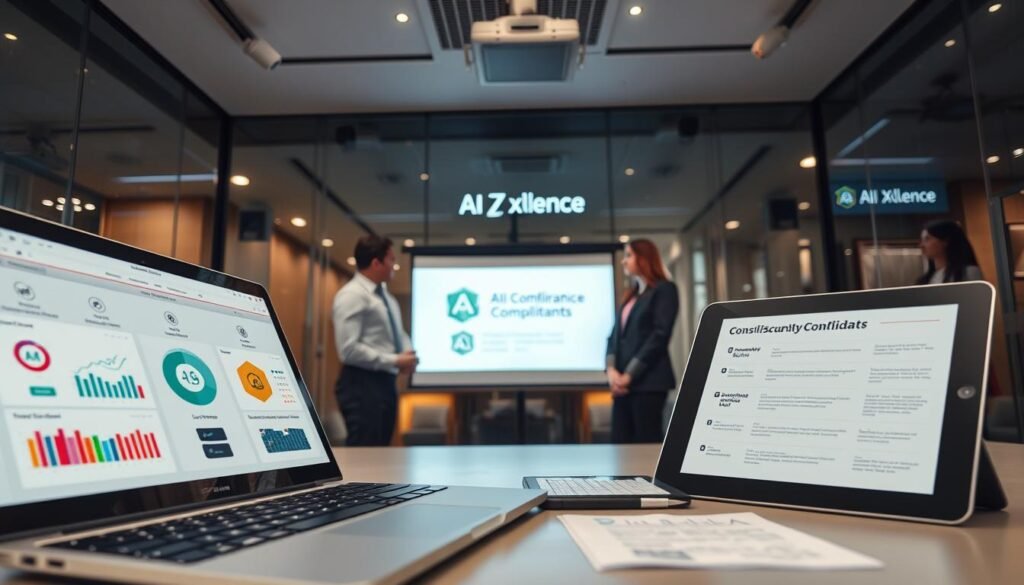
Embracing new technologies in consulting can lead to significant efficiency gains, but only with the right training. Many professionals face steep learning curves when adopting innovative tools. This can hinder productivity if not addressed properly.
According to EY’s Work Reimagined Survey, only 12% of employees receive sufficient training on new technologies. This statistic highlights why deployment alone rarely results in productivity improvements. Short, role-specific training can show you how to research, draft, summarize, and review outputs effectively.
Selecting an internal pilot team is crucial. They can document time savings, identify errors, and create repeatable instructions for colleagues. Onboarding should revolve around actual client work, ensuring that employees understand how tools fit into their daily responsibilities.
Finally, tracking active usage, completion rates, and employee feedback is essential. This data will help you measure the success of your training efforts before expanding tool usage across the firm.
Evaluating Cost Efficiency and ROI with AI Tools
Assessing the financial impact of modern tools is essential for every consulting firm. Understanding subscription pricing is just the beginning. For instance, Microsoft 365 Copilot costs $30 per user per month. This price must be weighed against the benefits of adoption and integration.
When calculating the total cost of ownership, consider various factors. These include implementation, training, administration, security reviews, and workflow redesign. Each element contributes to the overall expense.
Establishing baseline metrics is also crucial. Track proposal hours, research hours, and meeting administration before deployment. This data will help you compare your internal results with benchmarks, such as a Harvard Business School study showing AI users completed tasks 25.1% faster with over 40% higher quality output.
Finally, measure how saved time translates into value. Determine if it leads to faster proposals, improved service, or increased revenue. By evaluating these factors, you can ensure that your investment in tools yields significant returns.
Case Studies: Real-World Success Stories and Lessons Learned
Success stories from consulting firms reveal how transformative tools can enhance efficiency. A notable example comes from a Harvard Business School study of 758 consultants. Those who utilized modern tools completed tasks 25.1% faster and produced output with over 40% higher quality.
Integrating tools like meeting transcription, proposal libraries, and research assistants creates a cohesive workflow. For instance, ChatGPT can generate approximately 70% to 80% of eight LinkedIn posts in just five minutes, but human editing remains essential for accuracy.
However, there are common pitfalls to avoid. These include unchecked facts, weak prompts, and disconnected systems. Additionally, unclear ownership and insufficient training can hinder progress. It’s crucial to document the results of each pilot project, tracking baseline hours, quality reviews, and client feedback to measure financial impact.

Balancing General Assistants and Specialized Consulting Tools
Understanding the differences between general-purpose assistants and tailored platforms is key for modern consultants. While flexible tools like ChatGPT can assist with brainstorming, drafting, and summarizing documents, they may not grasp your firm’s specific credential system.
In contrast, Flowcase is designed specifically for managing CVs, resumes, and project credentials, ensuring compliant proposal exports. This specialization makes it a more effective choice for tasks requiring precision and structure.
When it comes to financial research, tools like AlphaSense outperform general assistants. They provide access to earnings calls and SEC filings, which are crucial for informed decision-making.
Moreover, Jasper offers brand voice controls that help maintain consistency in marketing and content creation across multiple contributors. This ensures that your messaging aligns with your firm’s identity.
Ultimately, combining a general assistant for flexible tasks with specialized tools for compliance and industry-specific needs can maximize your efficiency and enhance the value you deliver to clients.
Want to Use AI More Effectively in Your Business?
AI XLence gives small business owners practical ways to save time, improve productivity, reduce workload, and grow revenue using AI.
Explore AI XLencePractical Steps to Building Your AI Stack
Selecting the right tools can transform your consulting practice, but it starts with a focused strategy. Begin by identifying one painful workflow, such as proposal assembly or research collection. This targeted approach allows you to see immediate benefits without overwhelming your team with multiple tools.
Starting with a High-Impact Use Case
Consider pairing ChatGPT or Perplexity with Flowcase and Otter or Fireflies. This combination effectively covers research, proposals, and client communication.
Measuring ROI and Scaling Gradually
Before introducing these tools, record your current hours, turnaround times, and errors. This data will help you measure the impact of your new tools. Compare pilot results with the 2025 benchmark of saving more than 10 hours weekly and the 25.1% faster completion rate noted in Harvard research.
Scale your implementation only after the pilot shows reliable quality, acceptable security, and a positive return on investment. By following these steps, you can effectively build your AI stack and enhance your consulting efficiency.
Final Thoughts: Embrace AI to Stay Competitive in Consulting
To thrive in consulting, embracing modern tools is essential. By leveraging these innovations, you can reduce the workload of research, meeting notes, proposals, and administration. This allows you to focus on strategic judgment and client relationships.
Start with a focused use case, supported by measurable baselines and secure systems. Training employees on these tools is crucial for maximizing their effectiveness. General assistants like ChatGPT offer flexibility, while specialized platforms enhance compliance and research capabilities.
The Harvard Business School study shows that responsible adoption of these tools can improve both speed and quality. Here are some frequently asked questions:
- What are the best tools for consultants? Match a research tool, proposal platform, meeting assistant, or data product to your most expensive bottleneck.
- Can tools protect client information? Some enterprise products offer SOC 2, data residency, and audit trails, but verify vendor controls against each client contract.
- How quickly can you see ROI? Many firms see early time savings within weeks, though full ROI depends on integration and consistent usage.
- Should you choose a general or specialized tool? Use a general assistant for broad tasks, then select a purpose-built system for compliance and industry needs.
Be smart and stay ahead, Ray Baker.
FAQ
How can AI tools help streamline my consulting processes?
What are the benefits of using research tools in consulting?
How do automated proposal tools work?
What should I consider when choosing AI tools for my firm?
How can I ensure data security when using AI solutions?
What are the common challenges in adopting AI tools?
How can I measure the ROI of AI tools?
What role do case studies play in understanding AI effectiveness?
How can I balance using general assistants and specialized consulting tools?
What are the first steps to building an effective AI stack?
Want to Use AI More Effectively in Your Business?
AI XLence gives small business owners practical ways to save time, improve productivity, reduce workload, and grow revenue using AI.