
Ever wondered why your website traffic doesn’t match what your visitors need? The digital world is changing fast. It’s moving from simple links to a more detailed experience.
Google’s VP, Markham Erickson, said users want more than just links. They want summaries that make sense. This change makes creators rethink how they connect with people.
To succeed, you need to understand AI search intent. Focus on the “why” behind each question. This way, you give your readers exactly what they’re looking for. It helps small businesses stand out in a crowded market.
Answering real user questions makes your content relatable. When you match your content with today’s trends, you become a trusted source. Adapting to these changes keeps your brand seen and relevant in the future.
Quick Answer: How AI Helps Search Intent
Search behavior has changed a lot. Now, about 60% of searches don’t need to click on anything. AI answers are right there on the page. Brands need to understand AI search intent to stay seen.
Features like search overviews and “People Also Ask” boxes help content that’s clear and useful. By making complex topics easy to understand, you get noticed. But, your site must follow quality rules to avoid penalties that hurt your ranking.
To do well with search intent with AI, remember these tips:
- Prioritize direct answers: Make your content valuable right away.
- Focus on clarity: Use simple language that AI can understand.
- Anticipate user needs: Know what your audience wants and give them detailed answers.
Why Search Intent Drives Better Content
The way we make digital content has changed a lot. Now, search engines look at what users really need, not just keywords. By understanding AI SEO intent, creators can offer answers that meet users’ needs right away.
Google’s AI now shows the best answers right on the search page. This means thin content with lots of keywords can’t compete. Focusing on depth and relevance helps you meet modern algorithm standards.
By tackling the user’s problem, you connect better with them. This AI SEO intent approach makes your content valuable as search tech gets smarter. People like clear, authoritative content, which keeps them interested and moving forward.
The table below shows the big differences between old keyword tactics and new intent strategies:
| Strategy Element | Traditional SEO | AI-Driven Intent |
|---|---|---|
| Primary Focus | Keyword Density | User Problem Solving |
| Content Depth | Surface Level | Comprehensive Authority |
| Success Metric | Ranking Position | User Engagement/Action |
| Algorithm Goal | Matching Keywords | Matching Context |
Using AI SEO intent is key for marketers wanting to keep their traffic up. By giving users what they need, you earn their trust and value. This isn’t just a trend; it’s the new way to succeed in search.
How to Separate Informational and Buyer Intent
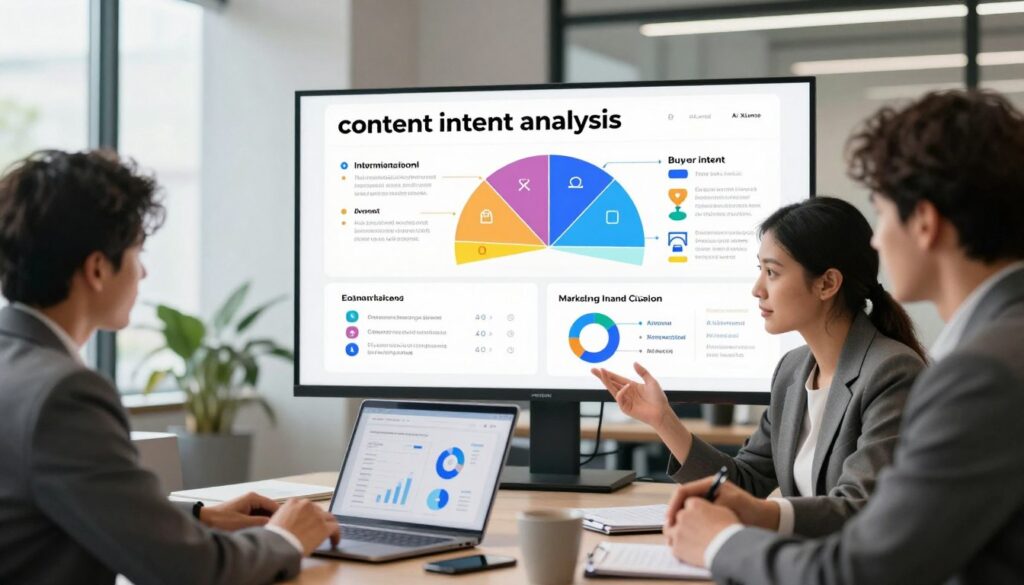
Knowing the difference between someone just looking and someone ready to buy is key for growth. Good search optimization uses content intent analysis to meet your audience’s needs. By sorting queries right, you send the right message at the right time.
Search intent has four main types. Knowing these lets you make your pages and posts match what users want.
Want to Use AI More Effectively in Your Business?
AI XLence gives small business owners practical ways to save time, improve productivity, reduce workload, and grow revenue using AI.
Explore AI XLenceToday, buyer intent AI helps marketers guess what users want before they click. It looks at patterns to see if someone is just looking or ready to buy. Using this info, brands can focus on the most valuable visitors.
| Intent Type | User Goal | Content Strategy |
|---|---|---|
| Informational | Learn something new | Educational blog posts |
| Navigational | Find a specific site | Brand-focused landing pages |
| Commercial | Compare options | Product reviews and guides |
| Transactional | Make a purchase | Checkout and sales pages |
Matching your pages to these stages is important for content intent analysis. When your headings and copy match the user’s stage, you boost your conversion rates. This smart strategy makes your buyer intent AI efforts count, not just show off.
How to Use AI to Find Reader Questions
Learning search intent with AI means listening to what your audience asks. Use tools like AlsoAsked and Answer the Public to see how users think. These tools show you related questions and sub-questions for your topics.
These visual maps show the big picture of informational intent AI. They help you see how questions connect. This way, you can make your content a journey for readers.
Look at the “People Also Ask” (PAA) boxes on search pages too. They show what users are missing in content. By finding these gaps, you can answer questions before they’re asked.
This way, you can get into AI summaries and featured snippets. By giving clear answers, you become a top resource. Using search intent with AI helps you beat competitors who just chase keywords.
The table below shows how different methods help with informational intent AI:
| Research Method | Primary Benefit | Best Use Case |
|---|---|---|
| AlsoAsked | Visualizes question hierarchies | Building content clusters |
| Answer the Public | Identifies long-tail queries | Brainstorming blog topics |
| SERP PAA Boxes | Reveals real-time user needs | Optimizing for featured snippets |
| AI Trend Analysis | Predicts future search patterns | Long-term content planning |
How to Align Headings With Intent
Your headings guide both readers and search engines. They help search engines understand your content better. This is key for AI SEO intent strategies.
Don’t use generic headings. Instead, match the language your audience uses. Use keywords like “how,” “best,” and “why” to guide AI systems.
These keywords help AI systems show your answers in summaries and PAA boxes. When your headings match user queries, you’re more likely to get featured snippets. This simple change can greatly improve your visibility.
“Content is the atomic particle of all digital marketing, and the structure of that content determines how easily it can be discovered and consumed.”
Using buyer intent AI in your headings helps at different stages. For example, “best” targets research users. “Cost of” aims at those ready to buy.
Aligning your headings with intent markers makes reading smooth. It also boosts your content for search algorithms. Making these small changes keeps you ahead in buyer intent AI.
Search Intent Mistakes to Avoid
Why do many top pages not turn visitors into customers? Often, it’s because the content doesn’t meet the user’s needs. Ignoring search intent why is user intent key to SEO can lead to unwanted traffic.
One big mistake is using generic, two-word headings. Instead, write conversational, question-based headlines. This makes your page more likely to match what people are searching for.
Want to Use AI More Effectively in Your Business?
AI XLence gives small business owners practical ways to save time, improve productivity, reduce workload, and grow revenue using AI.
Explore AI XLence
Keyword stuffing is another error. It makes the content hard to read and signals low quality to search engines. By doing a deep content intent analysis, you can find out what your audience really wants. This lets you create content that solves their problems, not just chases keywords.
Not considering the user’s journey is also bad for SEO. If someone wants a quick answer, they don’t want a long sales pitch. Using informational intent AI tools helps you understand where your reader is in their journey. This way, your content meets their needs.
| Common Mistake | The Consequence | The Better Approach |
|---|---|---|
| Generic two-word titles | Low click-through rates | Use question-based headlines |
| Keyword stuffing | Poor user engagement | Focus on natural language |
| Ignoring user journey | High bounce rates | Perform content intent analysis |
| Targeting wrong volume | Wasted traffic | Target qualified intent |
AI Search Intent Workflow
Modern SEO success needs a repeatable process. It aligns user needs with search intent with AI. By using these tools, you can make content that truly helps. This way, your content stays relevant as user needs change.
AI-driven search turns simple queries into learning paths. These paths are called “search journeys.” In these journeys, AI guesses what questions come next. This gives a more complete experience. To get better at this, check out the ultimate guide to AI search intent.
- Analyze the SERP: Look at top results to find the main intent of the query.
- Identify Content Gaps: Use AI tools to find questions that others don’t answer well.
- Map Pain Points: Match user problems with the right stage of the buyer’s funnel.
- Structure for Skimmability: Use clear headings and bullet points for easy reading.
Using AI search intent daily helps small business owners keep a consistent voice. Focusing on solving problems builds long-term authority. By using search intent with AI consistently, you stay ahead and offer real value.
Refining your AI search intent strategy improves your content over time. This workflow turns complex data into insights that grow your business.
FAQ
We’ve gathered the most common questions to help you master intent-driven content. These answers explain how technology connects a user’s search to their goal.
What is AI search intent?
AI search intent means algorithms understand what a user wants from a search. They use semantics to get the meaning behind words. This helps them tell if someone wants a quick answer or to buy something.
Can AI identify search intent?
Yes, today’s AI is great at figuring out what users want. They look at lots of data to see how people ask questions. This helps them know if someone is looking for info or ready to buy.
“The goal of search is not just to match keywords, but to satisfy the human need behind the search.”
Why does intent matter for SEO?
Intent is key for a good search strategy because it makes users happy. When your content meets what users want, you get many benefits:
- More people stay on your page longer.
- You get more sales from commercial searches.
- You rank better in search results.
How do I match content to buyer intent?
To match content to your audience, do a deep content intent analysis. First, figure out where your reader is in their journey. Use buyer intent AI tools to link keywords to the right pages.
Key strategies for success:
- Make clear calls to action for important keywords.
- Make sure your landing pages solve the user’s problem.
- Keep an eye on your numbers to get better over time.
Conclusion
Today’s search engines care more about making users happy than just matching keywords. Using old tactics can hurt your site as algorithms change. Building on AI SEO intent makes your online presence strong.
Want to Use AI More Effectively in Your Business?
AI XLence gives small business owners practical ways to save time, improve productivity, reduce workload, and grow revenue using AI.
Explore AI XLenceWhen you give your audience what they want, you build trust. This turns casual visitors into loyal fans. Keeping your content relevant is key, even as search tech gets better.
Smart brands see AI SEO intent as key to growing. This view helps you catch traffic others miss. By solving real problems, you stand out.
Stick to a user-first approach to stay ahead online. Your ability to adapt is key in an AI world. Be smart and stay ahead, Ray Baker.
FAQ
What is AI search intent?
Can AI identify search intent?
Why does intent matter for SEO?
How do I match content to buyer intent AI?
How should I structure content for informational intent AI?
What tools can help with content intent analysis?
Want to Use AI More Effectively in Your Business?
AI XLence gives small business owners practical ways to save time, improve productivity, reduce workload, and grow revenue using AI.