
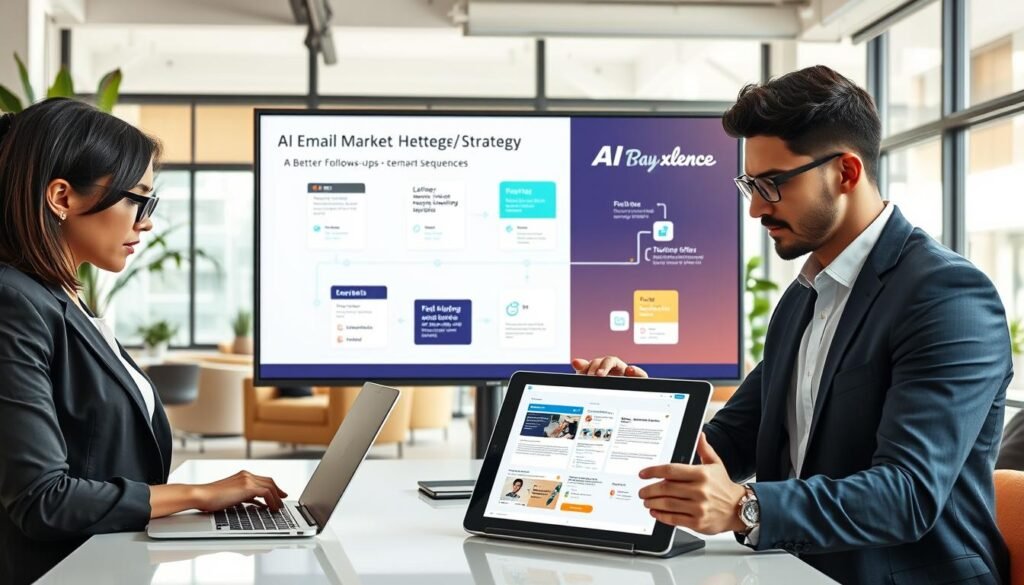
Imagine you’re a small business owner, juggling multiple tasks daily. You know that sending out effective emails is crucial for engaging your customers. However, the repetitive nature of crafting follow-ups and sequences often leaves you feeling overwhelmed. You wish there was a way to streamline this process without sacrificing quality.
Fortunately, there’s a solution that many are beginning to embrace. By utilizing advanced tools, you can automate email production. This means you can focus on what truly matters—building relationships with your audience. As customer preferences continue to lean towards email for brand interaction, the need for efficient strategies has never been more critical.
With the right approach, you can not only save time but also enhance the effectiveness of your campaigns. The landscape of communication is evolving, and now is the perfect time to leverage these tools for better results.
Key Takeaways
- Automation can help you produce stronger follow-ups and offers without adding to your workload.
- Email remains a preferred channel for customer interaction, even as its volume increases.
- Predictive tools can identify customer behavior patterns to optimize your strategies.
- Generative solutions enable you to create impactful content quickly.
- Embracing these technologies can lead to improved productivity and customer service.
Understanding the Role of AI in Modern Email Marketing
In today’s fast-paced business environment, many entrepreneurs find themselves overwhelmed by the demands of effective communication. Utilizing technology can transform your approach to email campaigns. It’s not just about sending messages; it’s about delivering personalized content that resonates with your audience.
Modern tools leverage data to analyze customer behavior, enabling you to tailor your messages. For instance, predictive technology can forecast customer actions, while generative solutions craft content that speaks directly to user needs. This evolution from traditional methods to tech-enhanced strategies allows marketers to engage their customers more effectively.
As you integrate these capabilities, you’ll discover the benefits of improved engagement rates and better audience segmentation. By adopting a more data-driven approach, you can create targeted campaigns that truly connect with your customers.
Building a Practical Framework for AI Integration
Running a small business means balancing numerous tasks each day. To enhance your email campaigns, establishing a solid data foundation is essential. This foundation allows you to leverage advanced tools effectively. Begin by defining clear business objectives. Whether it’s reducing production time or improving follow-up consistency, having goals will guide your strategy.
Next, audit your first-party data. This includes insights from your CRM, website, and customer support records. Clean data improves the effectiveness of your tools. For instance, identity records and engagement history enhance recommendations. With the right data, you can personalize your emails and boost engagement.
Consider starting with embedded no-code features. These tools can help you implement strategies without heavy investments. As a significant percentage of marketers anticipate AI-driven operations, being proactive will keep you ahead.
| Year | Teams Needing Production Time | Generative AI Use Increase |
|---|---|---|
| 2024 | 62% | N/A |
| 2025 | 6% | 340% |
Optimizing AI email marketing: Best Practices for Personalization and Automation
Navigating the complexities of customer engagement can feel daunting for any business owner. However, utilizing effective strategies can significantly enhance your email campaigns. Personalization and automation are key elements that can improve relevance without overwhelming your team.
By leveraging predictive analytics, you can transform customer data into actionable insights. For instance, a clothing retailer can analyze purchase history and browsing behavior to create tailored product recommendations. This allows one original email to generate multiple versions, each suited to different customer preferences.
Dynamic content powered by CRM data can support personalized offers and recommendations. Here are some best practices to consider:
- Utilize clear segment rules based on observable behavior, rather than vague assumptions.
- Ensure personalization enhances the customer experience while maintaining your brand voice.
- Connect personalization efforts to measurable outcomes like clicks and conversions.
By implementing these strategies, you can create engaging emails that resonate with your audience and drive results.
Mastering Send Times and A/B Testing Techniques
Running a business involves a multitude of tasks that can quickly become overwhelming. One critical aspect of effective communication is understanding when to send your messages. Utilizing machine learning can help you identify the optimal send times for your audience. This technology analyzes each subscriber’s historical responses to recommend individualized timing, moving away from a one-size-fits-all approach.
Want to Use AI More Effectively in Your Business?
AI XLence gives small business owners practical ways to save time, improve productivity, reduce workload, and grow revenue using AI.
Explore AI XLenceMoreover, machine learning can assess how often customers receive messages. It can suggest adjustments for those who may be overwhelmed by too many emails or for those who need more frequent communication. These insights allow marketers to tailor their strategies effectively.
In addition to timing, A/B testing is essential for optimizing performance. By comparing two versions of an email, you can identify which one resonates better with your audience. One marketer reported that generative tools improved their A/B testing efficiency tenfold, leading to faster insights and adjustments.
However, be cautious. With features like Apple Mail Privacy Protection, interpreting open rates can be challenging. Gmail’s AI summaries may also affect read times and engagement. Therefore, always define your primary success metrics before sending out campaigns. For more in-depth strategies, consider exploring A/B testing techniques.

Enhancing Email Content Through Intelligent Personalization
In the realm of communication, crafting engaging content is vital for capturing your audience’s attention. Utilizing intelligent tools can significantly enhance your email content, making it more appealing and effective. With the right strategies, you can draft compelling subject lines and body copy that resonate with your recipients.
Generative technology can assist you in creating various subject line options and tailored messaging for specific customer segments. For example, consider using customer preferences and past interactions to generate personalized content. This approach ensures that your emails are not just generic but relevant and engaging.
Moreover, contextual personalization, such as incorporating live weather updates based on a subscriber’s location, can further enhance engagement. Here are some tips to maximize your content creation:
- Prompt your tools to generate multiple subject lines and calls to action for a defined audience.
- Utilize data on purchase history and browsing behavior to refine your recommendations.
- Provide clear parameters, including your brand voice and compliance needs, when requesting content.
Lastly, always review AI-generated content for accuracy and tone before sending it out. Testing different messaging strategies can help you determine what drives higher engagement rates.
| Content Type | AI Capabilities | Personalization Impact |
|---|---|---|
| Subject Lines | Generate multiple angles | Increased open rates |
| Body Copy | Create tailored messages | Higher engagement |
| Calls to Action | Customizable for segments | Improved conversion |
Streamlining Workflow and Boosting Efficiency with AI Tools
In the world of business, managing your daily tasks can often feel like an uphill battle. Fortunately, advanced tools can help you streamline your workflow and enhance productivity. By automating repetitive tasks, you can free up valuable time to focus on more strategic activities.
One way to boost productivity is by identifying tasks suitable for automation. These can include list cleanup, segmentation, and drafting alt text. Additionally, AI-assisted templates can significantly reduce production time while ensuring that your team retains control over strategic positioning and final approvals.
Integrating AI platforms with your existing tools is crucial for maximizing efficiency. Connecting your email platform with CRM systems, website analytics, and customer service tools ensures that you have a complete customer profile. This integration allows for more accurate recommendations based on customer behavior and preferences.
Moreover, flow orchestration can facilitate multi-step approvals, routing drafts through writers, designers, and compliance reviewers seamlessly. Documenting ownership and approval thresholds is essential before automating any customer-facing workflows.

Addressing Challenges and Ethical Considerations in AI Email Marketing
In the complex landscape of modern business, small business owners often face numerous challenges. Among these are concerns regarding data privacy, security, and ethical use of advanced tools. Understanding these issues is crucial for effective communication and customer trust.
Want to Use AI More Effectively in Your Business?
AI XLence gives small business owners practical ways to save time, improve productivity, reduce workload, and grow revenue using AI.
Explore AI XLenceMarketers must prioritize the following:
- Collect only necessary customer data and document consent.
- Restrict access to sensitive information and understand vendor data handling practices.
- Review vendor security controls and data retention policies.
- Be aware of legislation in states like Arkansas and California regarding AI use.
Research has shown that tools like DALL-E 2 can produce biased imagery, emphasizing the need for human oversight. Generated content can also risk being inaccurate or inconsistent with your brand voice. Therefore, consulting legal professionals about privacy and marketing permissions is essential.
Real-World Examples and Common Pitfalls in AI-Driven Email Campaigns
Every day, business owners face the challenge of effectively reaching their audience. Understanding what works in email campaigns can help you avoid common pitfalls. Here are some lessons learned from successful implementations.
Lessons Learned from Successful Implementations
One effective strategy is using purchase and browsing data to support personalized product recommendations. For instance, a clothing retailer can tailor suggestions based on past customer behavior. This approach eliminates the need to manually create every version of an email.
Dynamic content, such as personalized Black Friday imagery, can also enhance engagement. However, these tools are only effective when the promotion aligns with audience preferences and inventory.
Avoiding Mistakes That Can Undermine Campaign Success
Marketers should be aware of the risks associated with excessive automation. Over-relying on AI can lead to inconsistent tone and messaging, as highlighted by Guy Hanson from Validity. Inconsistent vocabulary can expose low-quality content to recipients.
Common mistakes include changing multiple variables at once, trusting weak data, and optimizing only for open rates. It’s crucial to review deliverability, complaint rates, clicks, conversions, and customer feedback together before adjusting your strategy.
| Issue | Impact | Recommendation |
|---|---|---|
| Inconsistent Tone | Reduces trust | Maintain human oversight |
| Weak Data | Leads to poor targeting | Regularly audit data |
| Excessive Automation | Loss of personalization | Balance AI and human input |

Final Reflections: Key Insights and Next Steps
In the competitive landscape of business, staying connected with your audience is more crucial than ever. To enhance your email campaigns, start by identifying one measurable workflow problem, like slow follow-ups or inconsistent sequences. Build your strategies using consented first-party data, adding one capability at a time while ensuring human review of content.
Remember, the strongest use cases support repetitive, data-heavy tasks without replacing essential human judgment. The significant shift from 62% of teams needing two weeks or more to only 6% shows that redesigning workflows can save time.
As you move forward, measure clicks, conversions, revenue, and customer feedback alongside traditional engagement rates. Here are three key takeaways:
- Clean data improves recommendations.
- Controlled testing enhances decision-making.
- Responsible oversight builds trust and supports long-term performance.
Quick answer: You can leverage tools to write, personalize, test, and manage your outreach faster, but always keep your strategy human-led.
FAQ 1 — Can AI write complete emails? Yes, it can draft subject lines and content, but review for accuracy and tone.
Want to Use AI More Effectively in Your Business?
AI XLence gives small business owners practical ways to save time, improve productivity, reduce workload, and grow revenue using AI.
Explore AI XLenceFAQ 2 — Does AI improve open and click-through rates? It can enhance relevance, but privacy features may affect data completeness.
FAQ 3 — What data does email marketing need? Key inputs include consent status, purchase history, and customer preferences.
FAQ 4 — How should a small business start? Begin with low-risk tasks like subject-line ideation or follow-up drafting, then measure results.
Be smart and stay ahead, Ray Baker.
FAQ
What are the benefits of using machine learning in email campaigns?
How can I enhance customer engagement through email?
What is A/B testing and why is it important?
How do I determine the best send times for my emails?
What role does data play in email marketing strategies?
How can I automate repetitive tasks in my email campaigns?
What are common pitfalls to avoid in email campaigns?
How can I ensure data privacy and security in my email marketing efforts?
Want to Use AI More Effectively in Your Business?
AI XLence gives small business owners practical ways to save time, improve productivity, reduce workload, and grow revenue using AI.